Saturday, February 6, 2016

Early Christianity

Early Christianity ranged from about 330-800 CE.  It began with the death of Christ in ancient Judea which is an eastern outpost of the Roman Empire.  This specific Religion posed a threat to the emperor, in that Christians could not declare the divinity of the emperor.  Because of this refusal, the early Christians were persecuted.

Christianity promoted access to God and although it was basically and underground religion, many people still chose to practice it; consisting mainly of those in the lower class.

Finally, in 313 CE, the emperor Constantine legalized Christianity through the Edict of Milan.  Christians at last, were able to have houses of worship and display their holy artifacts.

Due to the rising number of believers, the early Christians were in need of new facilities for worship.  They used to gather in Roman temples, homes, or other existing buildings.  However, the temples were not built to accommodate large groups or taking of the Eucharist.  

The new buildings were referred to either as basilicas or cathedrals, depending on the shape and architectural structure.  Some characteristics of early Christian architecture included centrally planned buildings, separate baptisteries, clerestory windows, entrances of the church on the opposite apse, and the separation of the interior into nave and flanking aisles.

One of the more well known cathedrals was Old St. Peter's Cathedral Rome.  The interior is very intricate and elaborate, covered with frescos of biblical accounts.  The exterior on the contrary, is not as detailed but rather plainly decorated.  It' contains masonry walls, a wood roof, clerestory windows, and a wood truss ceiling.  The total length of the Cathedral is 700 feet. 

Another form of architecture is Sant' Apllinare in Classe-Ravenna ranging from 535-538 CE.  This structure is defined by geometric volume, 24 columns, mullion windows, triumphal arch, and semi vaulted apse with mosaics. 

There are very few examples of Christian furniture, but from what has been found, their pieces were very elaborate.  They followed the Roman style and were elaborate and richly decorated with jewels.  Storage within the church structure was one of the more important furniture items of this period.

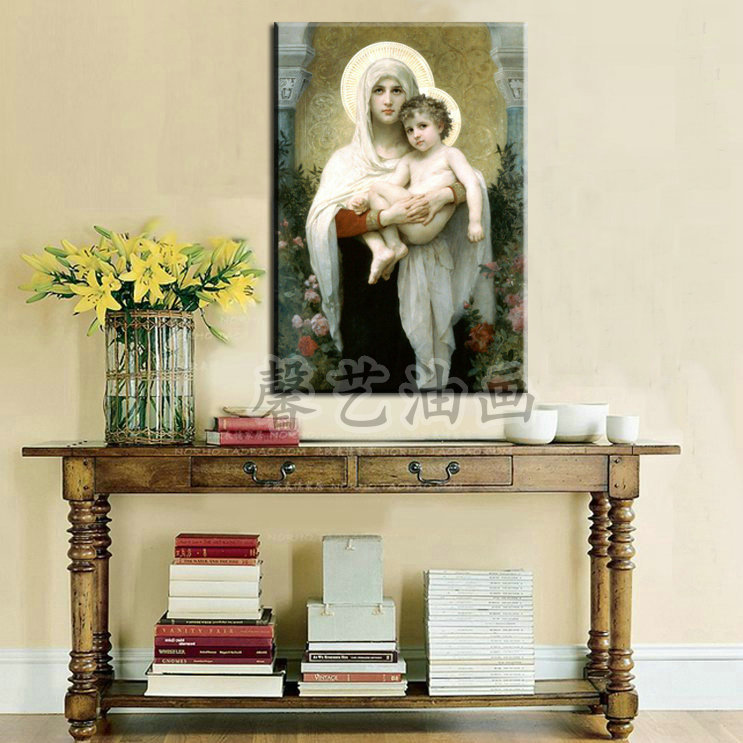
Motifs that are seen during this period were crosses, doves, fish, grapevine, and lambs.  The decorative arts consisted of paintings, murals, and frescos.  They incorporated images of Christ, the apostles, and Mary.

Past


Present


Extra Credit: https://www.youtube.com/watch?v=svVc3i71uQk

Sunday, January 31, 2016

Peer Reviews: Rome

Madelyn- I like how she covered all that we had discussed in class.  Getting to read her post was like a review and helped me to remember and retain the information.

Lisa- Her information was well organized and easy to follow.  It flowed well together, was detailed, and her pictures and videos tied in nicely with the rest of the post.  

Peer Reviews: Greece

Scott- I like how he broke up the content into different sections for his post.  It was easy to follow and not too wordy.

Savannah-  I like how she focused her post on the columns and furniture.  She explained both very thoroughly and gave me a better understanding of the columns.

Saturday, January 30, 2016

Rome

 Rome during its time was the greatest power west of china.  It served as a catalyst in spreading art and civilization.  They controlled commerce in the the western Mediterranean Sea and they were inspired by Greece.  The Romans mastered road building and used post and lintel construction for their buildings.  Their columns were both structural and decorative.  Extravagant ornamentation is seen throughout their furniture.  Vaults and domes started making their way into construction as well as concrete.  One can see major developments of the arch, barrel vault and domes.  Rome's structures reflected their social values.  Tombs and temples were religious structures, Basilicas were for commerce and law, and memorial structures were to celebrate victories.

The Colloseum is one of the most notable structures found in Rome.  It is made of stone and concrete as well as seats over 50,000.  The arch and barrel vault are present in the structure.  Gladiator fights and cultural events were held here.  

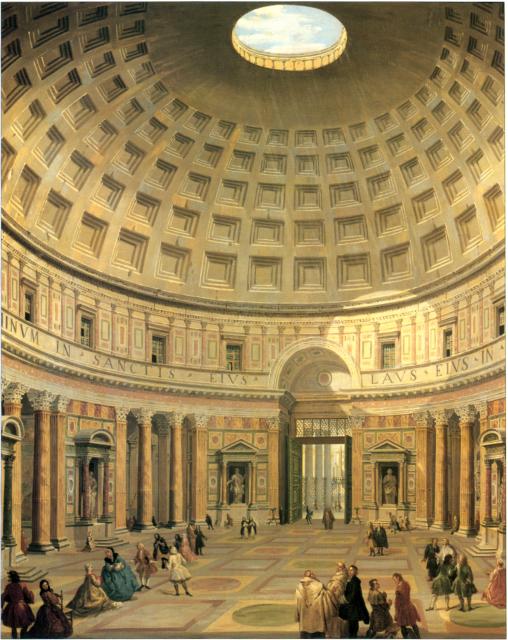
The Pantheon was built in 126AD and is the world's largest un-reinforced concrete dome of the world. It is a round temple with a dome and was commissioned by Marcus Agrippa.

Past 

Present
 

Extra Credit: https://www.youtube.com/watch?v=OOylD1KC6kc

Friday, January 29, 2016

Greece

Greek civilization marked the beginning of western ideas and culture.  They focused on the worth of the individual and democracy.  The Greeks were also masters of philosophy, science, fine arts, geography, medicine, legal systems, and astronomy.  Greece is surrounded by the Aegean, Mediterranean, and Ionian sea, and is considered a very mountainous country.

The inhabitants of Crete during 2,000 BC were referred to as Minoans.  The Palace of Knossos was the most important structure during this time.  It was the center of town housing holding 40,000 inhabitants.  This civilization also had very distinctive columns that differed from others.

The Golden Age was from 480-400 BC.  It was during this time in which the ancient temple,The Parthenon was built.  It is dedicated to the goddess Athena and is the most important surviving building of Classical Greece.

Columns were a big part of Greek construction and have become a symbol of this country.  While many of them serve the same purpose, there are different styles and ornamentation.  For the most part, each column contains a base, shaft, capital, and entablature.

The homes in Greece were not as elaborate as the temples or public buildings.  Most of the houses were built of mud-brick on a stone foundation.  They included wooden frameworks and terracotta roof tiles.  The courtyards had a few windows on the outside for security and limited the heat from the sun.  Rooms in the house were given specific purposes as seen in modern houses and some rooms were reserved for use by different sexes.  The homes were inwardly oriented and contained a compluvium and impluvium (cistern).  The compluvium was an opening in the roof that allowed for rainwater to enter, and the impluvium is the section that collected the water.  The floors were plastered and painted which symbolized the wealthy.  Other floors were done with mosaic technique using pebbles, glass, and stone.  Most of the designs were animals, flowers, or mythological creatures.  The walls were unplastered mud bricks and plastered with paintings.  The ceilings were mainly coffered and the doors had wood, stone, or marble frames. The Motifs that are most apparent for Greece are floral or marine, egg and dart, Greek Fret or key.

The furniture material seen throughout Greek culture included leather, cords, copper, bronze, iron, marble, and wood.  Thronos was a formal chair of honor, Klismos is a chair that is considered to be the most graceful and influential piece of Greek furniture, Diphros is a stool without arms or a back, and a Kline is a bed that functioned as a modern day sofa.  Their tables were small, portable, and lightweight.

Past

Present


Extra Credit: https://www.youtube.com/watch?v=AR84c-kr0f4

Saturday, January 23, 2016

Peer Reviews

Angie- Her post was very informative and straightforward.  It was easy to read, and I especially enjoyed her pictures.  The ones she chose for the current applications were unique and intriguing.

Anna- Inserting the pictures within the post always makes for an easy and understandable read.  I was able to see what she was talking about as I read it.

Ancient Civilization


     Egypt, Mesopotamia, and Nubia are the main focus when it comes to ancient civilization.  Ancient Mesopotamia is present day Iraq, and Ancient Nubia is present day Ethiopia and Sudan.  These areas, including Egypt developed in to high areas of complexity.  It was around 4,000 BC when larger cities and towns began appearing.  Advances were also made in architecture, math, law, and sculptures.  During this time, the architecture was not only used to intimidate viewers, it also showed power and distinguished the different classes of people.  Because of its close proximity to the Nile river, trade, transportation, and agriculture were a main focus.  Timber was an important item but was hard to come by in Egypt, so they began to have it imported from Lebanon.  Other construction material that was important was mud, stone, and brick, all used to build houses and temples.      
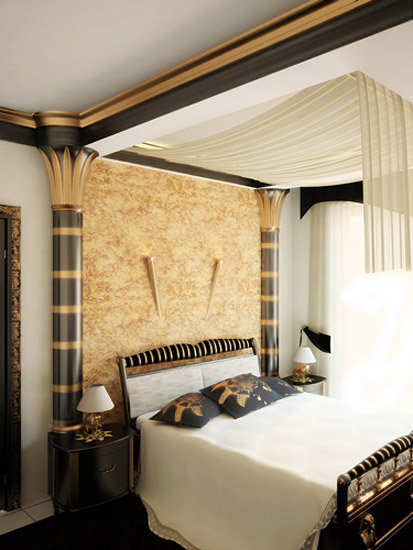
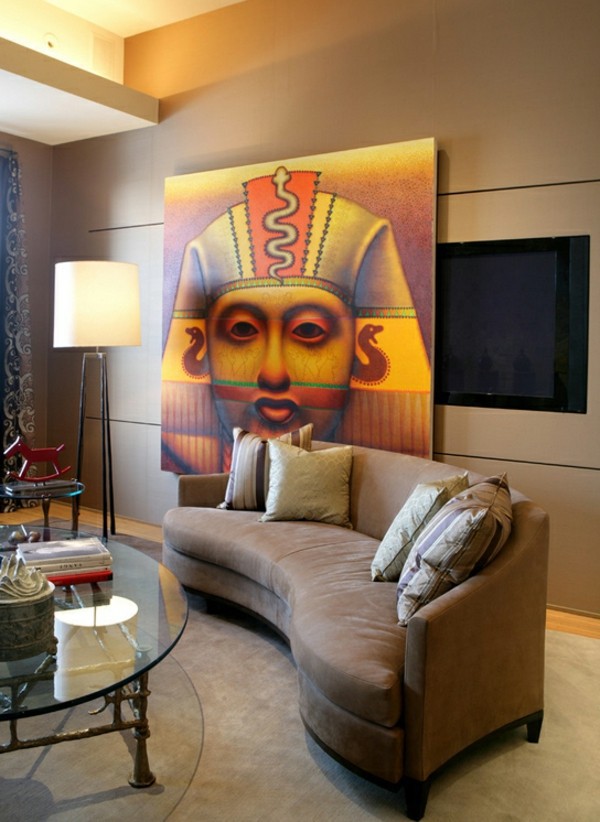
     As for the interiorsthe people of this time tried to incorporate lotus blossoms, palms, and open papyrus flowers.  They would carve these natural elements into the walls to serve as aesthetic decoration.  Religion was also a big influence, so many of the paintings and furniture design were in honor of their gods.


Past 

Present

Extra Credit: https://www.youtube.com/watch?v=ZC4U-2ntAGA